Following up after one week of an interview is a crucial step in demonstrating your continued interest and professionalism. It can significantly influence the hiring decision and shape the employer’s perception of your enthusiasm and suitability for the role.
Understanding the optimal timing, crafting an effective message, and choosing appropriate follow-up methods can enhance your chances of making a positive impression. This guide offers practical insights into how to navigate this important phase of the job application process with confidence and tact.
Importance of following up after 1 week of interview
Following up after a week of your interview is a crucial step in the job application process. It demonstrates your continued interest in the position and your proactive attitude, which many hiring managers value highly. A well-timed follow-up can serve as a gentle reminder of your candidacy and reinforce your enthusiasm for the role.
Timely follow-up not only reflects professionalism but can also influence the hiring decision positively. It provides an opportunity to address any additional questions the interviewer might have and reassert your qualifications. Conversely, neglecting to follow up might suggest a lack of interest or initiative, potentially putting you at a disadvantage in a competitive applicant pool.
Impact of a follow-up on hiring decisions and perceptions
When candidates follow up appropriately, they often leave a lasting positive impression that distinguishes them from other applicants. This behavior can signal strong interpersonal skills, respect for the hiring process, and genuine enthusiasm for the opportunity. Such traits are highly regarded by employers, especially in roles requiring communication and relationship management.
There are documented cases where strategic follow-up emails have successfully tipped the scales in favor of a candidate. For example, a candidate who took the initiative to send a concise, courteous message one week after their interview was remembered favorably by the hiring manager, ultimately leading to a job offer. This demonstrates how a timely follow-up can influence perceptions and open doors that might otherwise remain closed.
Optimal Timing for a Follow-Up Email After One Week
Determining the right moment to send a follow-up email after an interview is crucial for maintaining professionalism and demonstrating genuine interest. While a one-week interval is generally recommended, pinpointing the precise timing can significantly influence the impression you leave on potential employers. An appropriately timed follow-up can reinforce your enthusiasm for the position and keep you top of mind during the decision-making process.
Understanding the optimal timing involves balancing patience with proactive engagement. Sending a follow-up too early might appear impatient, whereas waiting too long can suggest a lack of interest. The goal is to communicate your continued enthusiasm at a moment when the employer is likely to have progressed with their decision process, thereby increasing the likelihood of a positive response.
Guidelines on When to Send a Follow-Up Message Post-Interview
Effective follow-up requires awareness of the typical interview timeline and the employer’s decision-making schedule. Generally, employers inform candidates of their decisions within a week or two after the interview. Sending your follow-up at the right time within this window ensures your message is relevant and well-timed. It is advisable to wait until at least one full week has passed since the interview, allowing the employer adequate time to evaluate candidates.
However, some situations may warrant adjusting this timing. For instance, if the interviewer provided a specific timeline, such as “we will decide within a week,” it is respectful to wait until that period has elapsed before reaching out. Conversely, if you haven’t received any communication after a week and the timeline was not specified, a gentle follow-up around the seven-day mark is appropriate to express your continued interest and inquire about the status.
Step-by-Step Schedule for Follow-Up Actions Within the Week
Implementing a structured follow-up plan ensures your communication remains professional and timely. The following schedule provides a clear framework for actions during the week after your interview:
- Day 1-2 post-interview: Send a thank-you email expressing appreciation for the opportunity, reiterating your interest, and briefly highlighting how your skills align with the role.
- Day 3-5: If no response has been received, review any additional information or updates from the employer. Use this period to prepare for potential next steps, such as additional interviews or assessments.
- Day 6-7: Prepare a concise, polite follow-up email. If the employer indicated a decision timeline, wait until the designated day to send this message. Otherwise, send a friendly inquiry about the status of the hiring process, reaffirming your enthusiasm.
- Post-Day 7: If still no response, consider a second follow-up after an additional week or two, or explore other opportunities if the timeline suggests the process has concluded.
This schedule ensures that your follow-up is persistent without appearing overly aggressive. It also demonstrates your proactive attitude and genuine interest in the role, qualities appreciated by hiring managers.
Comparison of Different Timing Strategies and Their Effectiveness
Several timing strategies are commonly employed in follow-up communication, each with varying levels of effectiveness based on context and industry norms. Here’s a comparison to help determine the most suitable approach:
| Strategy | Timing | Advantages | Disadvantages |
|---|---|---|---|
| Immediate Follow-Up | Within 24-48 hours | Shows enthusiasm and appreciation, keeps you fresh in the interviewer’s mind | May seem overeager or presumptive, especially if the employer is still in the decision phase |
| One-Week Follow-Up | Exactly one week after the interview | Balances patience with proactivity, aligns with common decision timelines | Risk of appearing impatient if not timed correctly, especially if the employer’s timeline is unknown |
| Two-Week Follow-Up | Two weeks after the interview | Allows sufficient time for decision-making, demonstrates persistent interest | Potential to be perceived as overly persistent if not spaced appropriately |
| As-Needed Follow-Up | Based on employer cues or specific timelines | Highly personalized, respects employer’s process | Requires careful observation; may delay follow-up if cues are unclear |
Research indicates that the one-week follow-up strikes an effective balance, aligning with typical hiring decision periods and showing proactive engagement without overstepping boundaries. Waiting too long may diminish the impact of your follow-up, while acting too soon can suggest impatience. Conversely, overly early follow-ups risk being overlooked or viewed as pushy, whereas delayed messages can imply disinterest.
“Timing is everything. A well-timed follow-up can reinforce your candidacy and demonstrate professionalism.”
Human Resources Expert
Crafting an effective follow-up message
Following up after an interview is a crucial step in the job application process, demonstrating professionalism, enthusiasm, and continued interest. An effective follow-up message not only reaffirms your interest in the position but also leaves a positive impression on the interviewer. Crafting such a message requires careful consideration of tone, content, and personalization to ensure it resonates well with the recipient and reflects your genuine interest.A well-structured follow-up email serves as a polite reminder of your candidacy while providing an opportunity to highlight key qualifications or clarify any points discussed during the interview.
It should be concise, respectful, and tailored to the specific interview experience, emphasizing your appreciation for the interviewer’s time and reiterating your enthusiasm for the role.
Key components to include in a professional follow-up email
Including the right elements in your follow-up message can significantly enhance its impact. Each component should contribute to a clear, respectful, and professional communication that reinforces your suitability for the position.
Begin with a courteous greeting that addresses the interviewer by name, expressing appreciation for their time and the opportunity to interview. Follow with a brief reminder of your interest in the role and a specific reference to the interview date or conversation, which demonstrates attentiveness and personalization.
Highlight a key point discussed during the interview or reiterate your most relevant qualifications, aligning them with the company’s needs. This reinforces your candidacy and shows that you are thoughtful about how your skills match the role.
Include a polite closing that invites further communication, such as offering to provide additional information or answer any questions. End with a professional sign-off, including your full name and contact information.
Sample templates emphasizing politeness and professionalism
Effective follow-up messages should strike a balance between professionalism and friendliness. Below are sample templates that exemplify this approach, adaptable to various interview contexts:
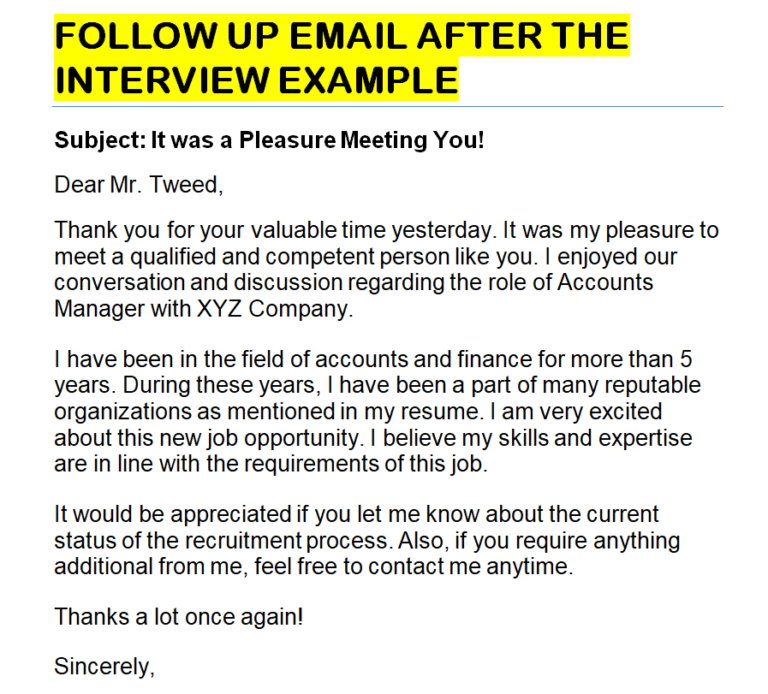
“Subject: Follow-up on Interview for [Position Title]”
Dear [Interviewer’s Name],I sincerely appreciate the opportunity to discuss the [Position Title] role with you on [interview date]. It was a pleasure learning more about [Company Name] and the exciting projects your team is working on.
I remain very enthusiastic about the possibility of contributing to your team, especially after our conversation about [specific topic discussed]. Please feel free to reach out if you need any additional information from my side.
Thank you once again for your time and consideration. I look forward to the possibility of working together.
Best regards,
[Your Full Name]
[Your Contact Information]”
“Subject: Appreciation for the Interview Opportunity”
Hello [Interviewer’s Name],Thank you for taking the time to meet with me on [interview date] regarding the [Position Title] position. I appreciated the chance to learn more about [Company Name]’s goals and how I might contribute to your team.
The discussion about [specific project or value discussed] resonated with me, and I am excited about the potential to bring my experience in [relevant skill or field] to support your objectives.
Please do not hesitate to contact me if I can provide any further details. I look forward to hearing from you.
Warm regards,
[Your Full Name]
[Your Contact Information]”
Personalizing the message to reflect specific interview details
Personalization enhances the authenticity of your follow-up, making it clear that you are genuinely interested and attentive to the interview’s specifics. To achieve this, incorporate details such as the interviewer’s name, the date of the interview, and particular topics or challenges discussed.Begin by referencing a specific point from the interview that sparked your interest or that you found particularly engaging.
For example, if the interviewer mentioned a current project, express your enthusiasm about how your skills could contribute to that initiative. Mentioning shared values, company goals, or upcoming projects demonstrates your genuine engagement and helps establish a connection.Additionally, if you identified any areas where you can provide further insights or solutions, subtly include this in your message. This approach not only personalizes your follow-up but also positions you as a proactive and thoughtful candidate who understands the company’s needs.
Remember to keep the tone respectful and professional, avoiding overly casual language while remaining friendly and approachable.
Additional Follow-Up Actions Beyond Email
Following the initial follow-up email, exploring alternative communication methods can significantly enhance your chances of staying top of mind with the interviewer. While email remains the most formal and widely accepted approach, supplementing it with other channels can demonstrate proactivity and genuine interest. These methods can also help you connect more personally or promptly, especially if email responses are delayed or if you wish to reinforce your enthusiasm for the role.Engaging through channels such as LinkedIn messages or phone calls offers distinct advantages.
LinkedIn, being a professional networking platform, allows you to maintain a subtle yet consistent presence. Phone calls, on the other hand, provide a direct and personal touch, often leading to quicker responses and more meaningful interactions. Employing these methods strategically can complement your email follow-up, ultimately strengthening your overall impression.
Alternative Communication Methods and Their Effective Use
Communication beyond email should be approached thoughtfully, considering timing, tone, and context. Each method has unique characteristics that can influence its effectiveness.
LinkedIn Messages
LinkedIn offers a discreet platform for staying connected. Sending a brief, polite message a week after your interview can reinforce your interest without appearing intrusive. It is advisable to ensure your LinkedIn profile is complete and professional, aligning with the message content. A typical approach involves referencing your recent interview, expressing appreciation, and briefly reiterating your enthusiasm for the role.
Timing-wise, sending the message during business hours on a weekday increases the likelihood of prompt attention.
Phone Calls
A well-timed phone call can be impactful, as it conveys sincerity and a strong desire to connect. Before calling, consider the company’s culture—some organizations appreciate direct contact, while others prefer formal communication. It is best to call during mid-morning or mid-afternoon, avoiding early mornings, lunch hours, or late afternoons when decision-makers may be busy. When making the call, prepare a concise script reiterating your interest, referencing the interview, and politely asking if there are any updates or further steps.
Maintaining a friendly, professional tone is key.
Comparison of Follow-Up Channels
The effectiveness of various follow-up channels depends on multiple factors, including the organizational culture, the interviewer’s preferences, and the nature of your relationship. The table below provides a comparative overview:
| Channel | Effectiveness | Advantages | Potential Drawbacks |
|---|---|---|---|
| High | Formal, documented, allows detailed communication | Can be impersonal, risk of being overlooked | |
| LinkedIn Message | Moderate to High | Personal touch, maintains professional presence | May be overlooked if not active regularly |
| Phone Call | High | Immediate interaction, personal connection | Potentially intrusive if not timed correctly, requires preparation |
For maximum impact, combining these methods—such as an email followed by a LinkedIn message or a courteous phone call—can demonstrate your enthusiasm and persistence without crossing boundaries. Each channel should be used thoughtfully, respecting the recipient’s communication preferences and organizational culture.
Closing Notes
In conclusion, a well-timed and thoughtfully crafted follow-up can set you apart from other candidates and reinforce your interest in the position. By employing strategic communication methods and maintaining professionalism, you can leave a lasting impression that may lead to a successful job opportunity.