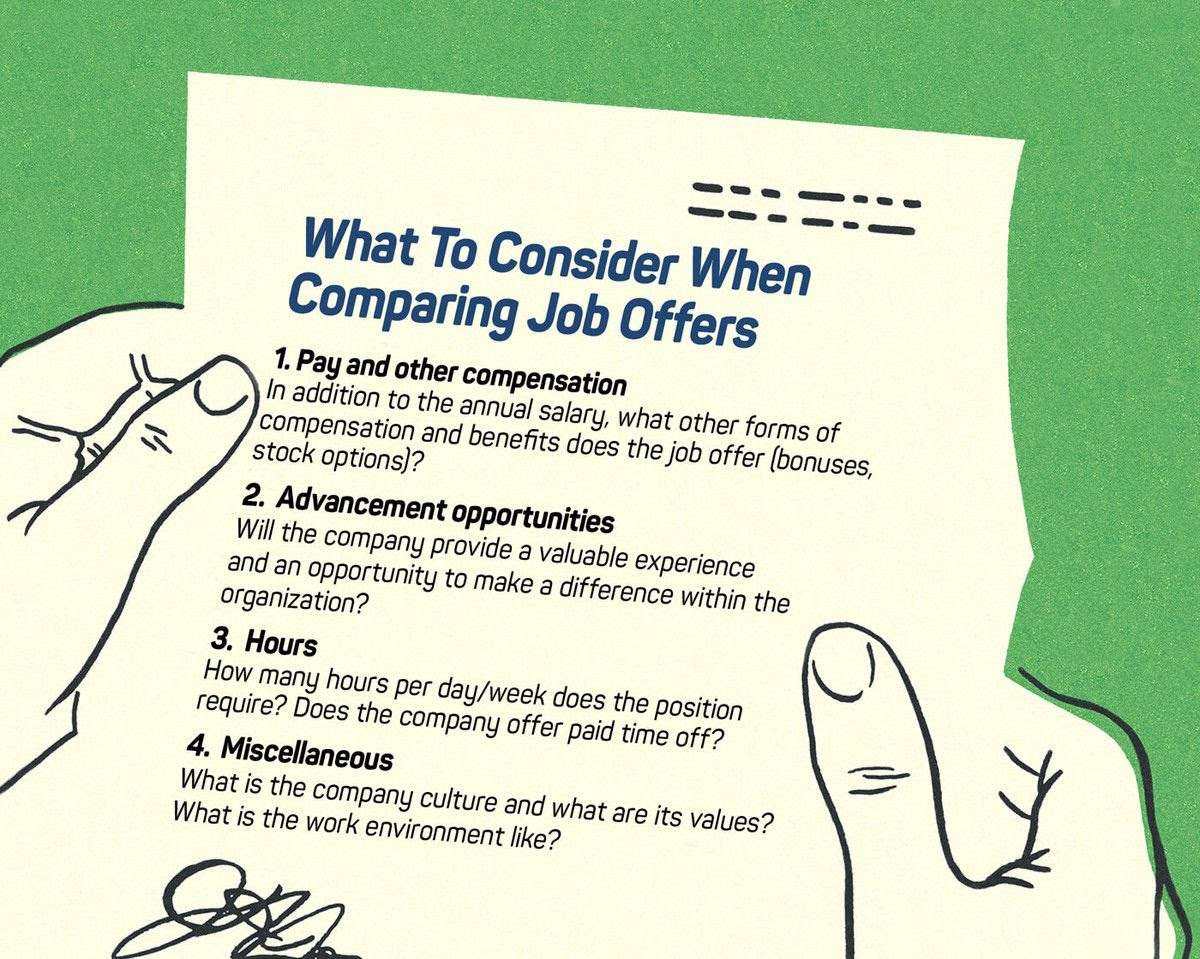
When faced with the challenge of selecting between two job offers, making an informed decision becomes essential for long-term career satisfaction. Understanding the various factors that influence your choice can help you weigh options objectively and confidently.
This process involves evaluating compensation packages, job responsibilities, company culture, location, and future growth opportunities. By systematically comparing these elements, you can identify the position that best aligns with your professional goals and personal values.
Factors to Consider When Comparing Two Job Offers

Choosing between two job offers can be a complex process that requires careful evaluation of multiple factors. While salary is often the most immediate consideration, other elements such as benefits, role responsibilities, growth potential, and company culture play crucial roles in making an informed decision. Understanding how these components align with your personal and professional goals will help ensure you select the opportunity that best fits your aspirations and lifestyle.When comparing two offers, it’s essential to look beyond the surface numbers and delve into the qualitative aspects of each position.
A comprehensive analysis involves assessing financial compensation, the perks included, the scope of the job responsibilities, and the environment in which you’ll be working. This holistic approach enables you to identify the true value of each opportunity and determine which aligns best with your long-term career trajectory.
Salary, Benefits, and Perks
Financial compensation is often the starting point in evaluating job offers, but it is equally important to consider the overall value of the benefits package. Salary provides a baseline, but perks such as health insurance, retirement plans, stock options, and paid time off significantly contribute to your overall compensation. For example, a slightly lower salary might be offset by comprehensive health coverage and generous paid leave, which can enhance your quality of life.Benefits can also include flexible working arrangements, professional development allowances, wellness programs, and transportation subsidies.
When comparing these, it is beneficial to quantify their value where possible. Creating a comparison table can help visualize differences clearly:
| Component | Job Offer A | Job Offer B |
|---|---|---|
| Base Salary | $85,000 | $90,000 |
| Health Insurance | Gold Plan, covered 80% | |
| Retirement Contributions | 5% match | |
| Paid Time Off | 20 days/year | |
| Other Perks | Flexible hours, gym subsidy | |
| Stock Options | Yes, 100 shares | |
| Annual Bonuses | 10% of salary |
Evaluating the tangible benefits alongside salary helps create a more accurate picture of total compensation and supports a balanced comparison.
Job Roles, Responsibilities, and Growth Opportunities
The nature of the job role and the scope of responsibilities directly impact your daily satisfaction and professional development. Analyzing whether the tasks align with your skills and interests is vital. Additionally, understanding the opportunities for advancement within each organization can influence your long-term career trajectory.Consider the following factors during your evaluation:
- The complexity and variety of tasks involved in each role
- The potential for skill development and acquiring new competencies
- Clear pathways for promotion or lateral movement within the company
- The alignment of job responsibilities with your career goals
- The support provided for ongoing training and certifications
It’s beneficial to create a comparative list or matrix that highlights these aspects for each offer. For example, if one role offers leadership training and mentorship opportunities, this might outweigh a marginally higher salary elsewhere, especially if you aim to ascend to managerial positions in the future.
Company Culture, Values, and Work Environment
The organizational culture and work environment significantly influence job satisfaction and daily productivity. An environment that resonates with your personal values and offers a positive, inclusive atmosphere can lead to better engagement and lower stress levels.When assessing company culture, consider:
- The company’s mission, vision, and core values and how they align with your own principles
- The management style and communication practices
- The diversity and inclusiveness of the workplace
- The level of collaboration versus autonomy expected
- The overall work environment, including physical workspace and social dynamics
Organizing this information into a comparison table can clarify distinctions more effectively:
| Aspect | Company A | Company B |
|---|---|---|
| Values and Mission | Innovation and Sustainability | |
| Management Style | Open-door policy, participative decision-making | |
| Work Environment | Modern office with collaborative spaces | |
| Work-Life Balance | Flexible hours, remote options | |
| Employee Engagement | Regular team-building events, feedback sessions |
A thorough comparison of company culture helps ensure your work environment supports your well-being and professional growth, reducing potential mismatches and enhancing long-term satisfaction.
Analyzing Compensation and Benefits Packages
When evaluating two job offers, understanding the full scope of compensation and benefits is essential for making an informed decision. These components significantly impact your financial stability, work-life balance, and overall job satisfaction. Breaking down each element allows for a clearer comparison and highlights the value each employer provides beyond just the base salary.
This section provides a structured approach to dissecting salary, bonuses, stock options, and other perks. It also offers guidance on assessing health insurance, retirement plans, and additional benefits, ensuring that you consider both immediate and long-term advantages in your decision-making process.
Breaking Down Compensation Components
The first step involves a detailed analysis of the core elements of each offer. This helps you understand the tangible financial rewards and gauge their relative worth accurately.
- Salary: Review the annual gross salary offered, noting any differences in pay frequency (monthly, bi-weekly, annual). Consider potential for future salary increases based on company policies or performance reviews.
- Bonuses and Incentives: Identify if performance bonuses, signing bonuses, or other incentive schemes are included. Evaluate the eligibility criteria, payout frequency, and the typical amount awarded based on historical data or industry standards.
- Stock Options and Equity: Determine the type of stock benefits offered, such as stock options, restricted stock units (RSUs), or employee stock purchase plans (ESPP). Examine the vesting schedule, strike price, and potential growth value, considering how these could compound over time.
Example: If Job A offers a base salary of $80,000 with a $10,000 signing bonus and stock options vesting over four years, while Job B offers $75,000 with no stock options, the total compensation value of Job A could be higher despite similar base salaries.
Assessing Benefits and Perks
Beyond direct compensation, benefits and perks contribute to your overall job satisfaction and long-term security. Evaluating these elements ensures a comprehensive comparison.
- Health Insurance: Review the health plan options, including coverage types (HMO, PPO), premiums, deductibles, co-pays, and coverage limits. Consider whether family coverage is included and the process for adding dependents.
- Retirement Plans: Compare employer-sponsored retirement plans such as 401(k) or pension schemes. Examine employer contribution matching policies, vesting periods, and investment options available within each plan.
- Additional Perks: Assess other benefits like paid time off (vacation, sick leave), flexible working arrangements, professional development allowances, wellness programs, transportation subsidies, and childcare support. Determine how these perks align with your personal needs and lifestyle.
Template for Compensation Comparison
To facilitate a clear comparison of the compensation details from both offers, consider creating a table as shown below. This template allows you to input specific figures for an apples-to-apples evaluation.
| Component | Job Offer A | Job Offer B |
|---|---|---|
| Base Salary | $________ | $________ |
| Bonuses | $________ | $________ |
| Stock Options/Equity | Type: __________ Vesting Schedule: __________ Estimated Value: __________ |
Type: __________ Vesting Schedule: __________ Estimated Value: __________ |
| Health Insurance | Premiums: $________ Coverage: __________ Deductibles: $________ |
Premiums: $________ Coverage: __________ Deductibles: $________ |
| Retirement Plans | Employer Match: __________ Vesting Period: __________ |
Employer Match: __________ Vesting Period: __________ |
| Other Benefits | Paid Time Off: __________ Perks: __________ |
Paid Time Off: __________ Perks: __________ |
Assessing Company Culture and Work Environment

Choosing between job offers involves evaluating not only the tangible benefits but also the intangible aspects that influence daily work life. A key consideration is understanding the company’s culture and work environment, which significantly impact employee satisfaction, engagement, and overall well-being. Gaining insights into these areas helps determine whether the organization aligns with your values, work style, and career aspirations, ultimately leading to a more fulfilling professional experience.Understanding the company’s core values, approach to diversity, and employee satisfaction levels provides a comprehensive picture of its cultural landscape.
These elements shape the day-to-day environment and influence long-term career growth within the organization. Comparing work-life balance, flexibility, and management style across potential employers offers further clarity, enabling you to select a workplace that supports your personal needs and professional goals.
Gathering Insights into Company Values, Diversity, and Employee Satisfaction
A thorough assessment begins with collecting information from multiple sources to form an accurate picture of the company’s culture. Company websites, especially sections dedicated to mission statements and values, reveal the organization’s core principles and priorities. Employee reviews on platforms like Glassdoor or Indeed offer candid perspectives on workplace realities, highlighting strengths and areas for concern.Networking with current or former employees provides valuable firsthand insights into the company’s environment.
Informational interviews or casual conversations can uncover details about management practices, team dynamics, and inclusivity initiatives. Additionally, attending company events or webinars can showcase the organization’s commitment to diversity and alignment with your personal values.To gauge employee satisfaction, consider reviewing metrics such as retention rates, awards for workplace excellence, and employee testimonials. Surveys or internal reports, if accessible, can offer quantitative data on morale and engagement levels.
Recognizing signs of high employee satisfaction, such as collaborative culture and recognition programs, helps forecast your potential experience within the company.
Comparing Work-Life Balance, Flexibility, and Management Style
A positive work environment often hinges on work-life balance, flexibility, and leadership approach. Evaluating these factors is crucial to ensuring your well-being and career satisfaction.Work-life balance can be assessed by understanding expected working hours, overtime policies, and support systems such as wellness programs. Companies that promote reasonable hours and respect personal time tend to have healthier, more motivated employees. Flexibility refers to options like remote work, flexible schedules, and compressed workweeks, which accommodate diverse personal circumstances and enhance productivity.Management style significantly influences daily operations and your overall experience.
In organizations with transparent, supportive leaders, employees report higher engagement and trust. Conversely, autocratic or uncommunicative management may lead to dissatisfaction. Observing how managers communicate, provide feedback, and handle conflict offers insights into the leadership culture.When comparing two offers, creating a side-by-side chart illustrating each company’s policies on work hours, flexibility options, and management practices simplifies decision-making. For instance, one employer may offer remote work two days a week with a focus on results rather than hours, while another might require in-office presence with a traditional management style.
Descriptive comparisons like these help identify which environment aligns better with your lifestyle and preferred management approach.
Considering Location and Commute

Choosing between job offers involves evaluating numerous factors, with location and commute playing a significant role in overall job satisfaction and daily life quality. Understanding how commute times, remote work options, and relocation requirements influence your decision can lead to a more balanced and sustainable work-life arrangement. Making an informed assessment of these elements can help prevent stress, reduce expenses, and align your job choice with your personal circumstances.Commute considerations directly impact your daily routine, energy levels, and financial expenditures.
Longer commutes can lead to fatigue, decreased free time, and increased transportation costs, while flexible or remote work options offer greater convenience and work-life harmony. Evaluating your current living situation, potential changes, and the logistics involved in each offer ensures that your choice supports your well-being and lifestyle preferences.
Impact of Commute Times, Remote Work, and Relocation
The distance and time required to travel between your home and workplace significantly influence your overall job satisfaction. A lengthy commute—such as an hour each way—may contribute to fatigue, reduce personal time, and increase transportation expenses. Conversely, shorter commutes can enhance daily productivity and leisure time, fostering a healthier work-life balance. Remote work options have become increasingly prevalent, providing flexibility that can eliminate daily travel altogether or reduce it substantially.
When considering remote or hybrid arrangements, it’s important to evaluate the company’s policies, technological support, and how remote work aligns with your job responsibilities and personal preferences. Relocation requirements introduce additional considerations, including the costs of moving, adapting to a new community, and potential lifestyle changes. If a job offers an attractive position but requires relocating, assessing the feasibility and personal impact of such a move helps in making a comprehensive decision.
To estimate daily travel time and associated costs, follow these steps:
- Measure the one-way distance between your current or prospective home and the workplace using online mapping tools or GPS devices.
- Calculate the average travel speed based on your preferred mode of transportation—driving, public transit, cycling, or walking.
- Estimate the total round-trip time by multiplying the one-way duration by two.
- Consider variations such as traffic congestion, delays, and transportation schedules to refine your estimates.
- Assess the costs, including fuel expenses, public transit fares, parking fees, and maintenance for personal vehicles, or subscription costs for transit passes.
For example, if a daily commute involves a 30-minute drive each way with an average fuel consumption of 25 miles per gallon and a distance of 15 miles, you can calculate the daily fuel expense. If gas costs $3 per gallon, the daily fuel cost is approximately:
(15 miles x 2 / 25 miles per gallon) x $3 = $3.60 per day.
Over a standard workweek, this amounts to around $18, not including parking or other incidental expenses.
Location Pros and Cons Comparison Table
When weighing job offers, organizing location-specific factors into a clear comparison table can facilitate objective evaluation. Such a table should include key considerations like commute duration, transportation options, relocation costs, and lifestyle suitability.
Factor Job Offer A Job Offer B Commute Time (one-way) 30 minutes by car 15 minutes by public transit Transportation Options Personal vehicle, limited public transit Accessible public transit, biking possible Relocation Requirement Yes, 50 miles away No, within current city Estimated Monthly Commute Cost $100 (fuel + parking) $50 (public transit pass) Local Amenities and Lifestyle Suburban area, family-friendly Urban center, vibrant social scene Having a structured comparison enables you to evaluate the practical implications of each location, balancing convenience, expenses, and lifestyle fit. This detailed approach ensures your final decision aligns not only with career goals but also with your personal comfort and daily living demands.
Analyzing Long-term Stability and Company Outlook
Choosing between two job offers involves not only assessing the immediate benefits but also considering the long-term stability of each employer. Understanding a company’s financial health, market position, and growth trajectory provides valuable insights into its sustainability and potential for future success. This analysis helps you make an informed decision that aligns with your career goals and risk tolerance, ensuring that your choice supports both personal and professional development over time.A thorough evaluation of company stability involves examining various factors that influence its long-term viability.
By identifying risks and opportunities associated with each employer, you can better anticipate future challenges and benefits. Creating a detailed list of each company’s strengths and weaknesses facilitates a comparative analysis, enabling you to visualize which organization offers a more secure and promising environment for your career.
Researching Company Financial Health, Market Position, and Growth Trajectory
Understanding a company’s financial health is fundamental to assessing its stability. Review publicly available financial statements, such as annual reports and quarterly earnings, to gauge profitability, cash flow, debt levels, and revenue trends. For private companies, consider industry reports, credit ratings, and insights from financial analysts. A financially robust company typically demonstrates consistent revenue growth, manageable debt, and healthy profit margins, indicating resilience during economic fluctuations.Examining the company’s market position involves analyzing its share within the industry, competitive advantages, and brand reputation.
A leader with a strong market presence and diversified product portfolio is generally better positioned for sustained success. Pay attention to market trends, customer loyalty, and innovation capacity, which can signal future growth potential.Assessing the company’s growth trajectory involves reviewing historical expansion patterns, strategic initiatives, and future plans. Look for evidence of recent investments in technology, R&D, or geographic expansion.
Additionally, evaluate the company’s leadership, strategic vision, and responsiveness to industry shifts. Companies with a clear and achievable growth plan are more likely to provide long-term stability.
Identifying Risks and Opportunities
Recognizing potential risks and opportunities helps you understand the external and internal factors that could impact each employer’s future. Risks may include high debt levels, declining market share, dependence on a limited product line, or vulnerability to economic downturns. For example, a company heavily reliant on a single client or market segment might face significant challenges if that client withdraws or that market contracts.Conversely, opportunities could stem from emerging markets, innovative product development, or strategic acquisitions.
For instance, a company investing heavily in renewable energy might position itself advantageously as the industry shifts towards sustainability. Staying informed about industry trends, regulatory changes, and technological advancements can reveal these opportunities and risks.By systematically analyzing these elements, you can better anticipate the company’s resilience and adaptability in changing circumstances. This insight enables you to select an organization with a stable outlook that aligns with your long-term career aspirations.
Creating a List of Company Strengths and Weaknesses
To facilitate a clear comparison, compile a comprehensive list of each company’s strengths and weaknesses based on your research. This list provides a quick reference to assess which employer offers a more stable and promising environment.
- Strengths:
- Strong financial position with positive cash flow and manageable debt levels
- Leading market position with competitive advantages and brand recognition
- Demonstrated consistent growth over recent years
- Investments in innovation and expansion initiatives
- Resilience demonstrated during economic downturns
- Weaknesses:
- High dependency on a single product line or market segment
- Significant debt or liquidity concerns
- Recent leadership changes causing strategic uncertainty
- Limited diversification or geographic presence
- Exposure to regulatory or industry-specific risks
Applying this approach to both offers enables you to compare the long-term viability of each employer objectively. Ultimately, selecting the company with a more favorable stability profile can contribute significantly to your career security and growth prospects.
Making a Decision: Structuring Your Evaluation
Choosing between two job offers can be a complex process that requires careful organization and prioritization. To reach a confident and well-informed decision, it is essential to develop a structured approach that aligns with both your personal aspirations and professional goals. By systematically evaluating each offer through clear criteria, you enhance the likelihood of selecting the opportunity that best suits your long-term development and well-being.A well-structured evaluation process helps reduce bias, clarify priorities, and provide a transparent basis for comparison.
It enables you to view each aspect of the offers objectively, facilitating a balanced and comprehensive decision-making process. This approach not only simplifies complex choices but also boosts your confidence in the final decision, knowing it is grounded in a methodical and deliberate assessment.
Prioritizing Factors Based on Goals
Understanding what matters most to your career and personal life is crucial when evaluating job offers. These priorities may differ significantly based on individual circumstances. For example, a candidate aiming for rapid career growth may prioritize learning opportunities and advancement potential, while someone seeking work-life balance may focus more on company culture and work environment.To effectively prioritize, consider creating a list of your core goals, such as income, professional development, flexibility, company stability, or location.
Then, assign a level of importance to each factor, perhaps using a scale from 1 (least important) to 5 (most important). This method helps to clarify which aspects of each job offer should carry more weight in your overall evaluation.One practical approach involves the use of a personal scoring system where each factor is rated for each offer, then weighted according to its importance.
This systematic process ensures your decision aligns with your values and long-term aspirations.
Organizing Evaluations into a Structured Format
Transforming your evaluations into clear, organized formats allows for easier comparison and better decision clarity. Pros and cons lists are simple yet effective tools that help you visualize the advantages and disadvantages of each offer across various factors. For each job, list key benefits and drawbacks related to compensation, culture, location, stability, and other relevant aspects.For example, a pros list for Offer A might include higher salary and better benefits, while cons could involve longer commute and limited growth opportunities.
Conversely, Offer B might offer a more flexible work environment but lower compensation. Summarizing these points side by side provides clarity on which offer aligns more closely with your overall priorities.Additionally, designing a comprehensive scoring matrix can facilitate an objective comparison. Construct a table with factors as columns and each offer as a row, then assign scores based on your evaluations.
Incorporate weights reflecting the importance of each factor, and calculate a total score for each offer. The option with the highest score can serve as a strong indicator of the best fit according to your criteria.
Using a structured scoring system helps quantify subjective judgments, providing a clear and rational basis for your final decision.
This method enhances transparency and confidence, ensuring your choice reflects your personal and professional priorities systematically.
Epilogue
In conclusion, choosing between two job offers requires a comprehensive assessment of multiple factors. By carefully analyzing each aspect and prioritizing what matters most to you, you’ll be well-equipped to make a decision that fosters both career development and personal fulfillment.